|
Functions Limits Differentiation Differentiation Max and Min Profit, Cost, and Revenue Linear Programming Integration
Differentiation Max and Min
This will follow a basic pattern and we just have to be careful that we use the correct formula at the right time.
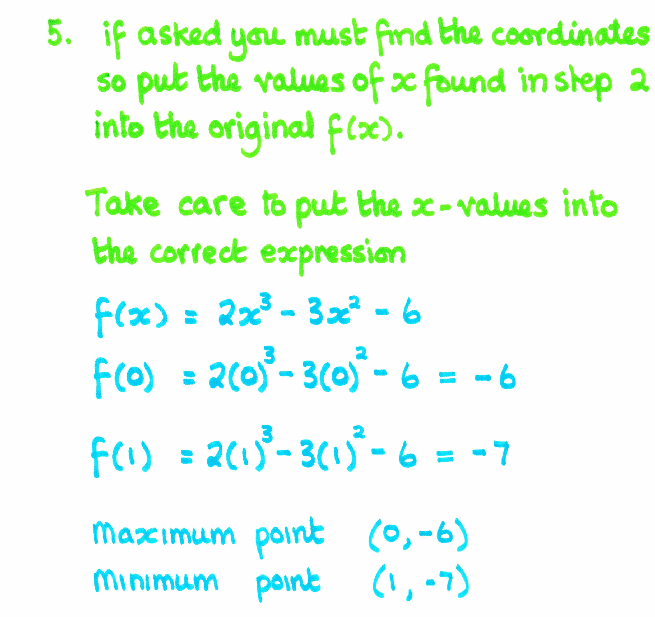
When it says find the coordinates, you will be expected to have both x and y values. It does not matter whether it is a maximum or a minimum or just a point on the curve, you will still have to state both values. You will find the coordinates by substituting the values back into the original equation, f(x).
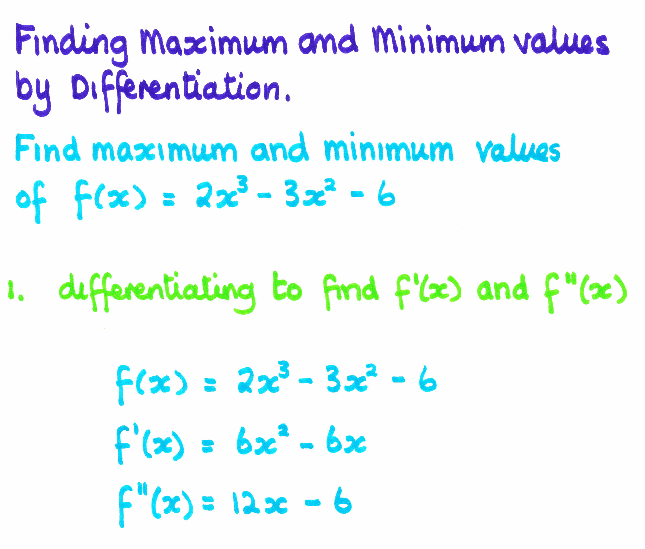
You will start off with a function f(x) such as: f(x) =2x3- 3x2- 6 Now we will differentiate to get f ’(x) so we get: f ‘(x) = 6x2- 6x Now we will differentiate to get f ” (x) so we get: f ”(x) = 12x - 6
The value f(x) will give us points on the actual curve so x= 0, f(0) = 2 03 -3 02 -6 = -6 This is where the curve crosses the y-axis.
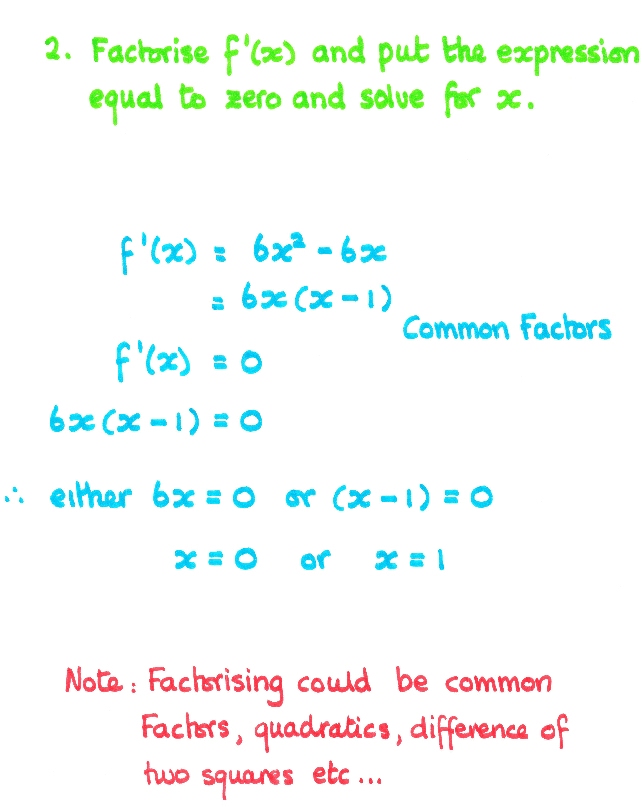
The value f ’(x) will help us find the gradient at any point but often we want to find the turning points, ie maximum and minimum points. This is where the gradient is zero.
There are three situations with the gradient, f ’(x):
f ’(x) can be negative then the function is decreasing f ’(x) can be zero then the function is stationary (not changing). f ’(x) can be positive then the function is increasing.
So back to the example, find the turning points first:
So if we are asked for the coordinates of the maximum or minimum turning points, then we put the value of x back into the original equation, f(x).
f(x) =2x3- 3x2- 6 f(0) = 2 (0)3- 3(0)2- 6 = - 6 f(1) = 2 (1)3- 3 (1)2- 6 = -7
So the coordinates of the points are ( 0,- 6) and ( 1,- 7).
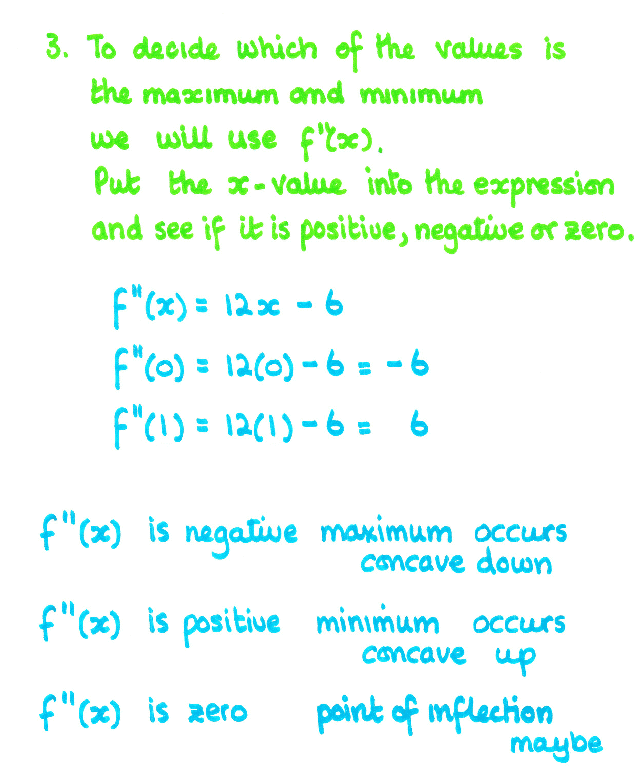
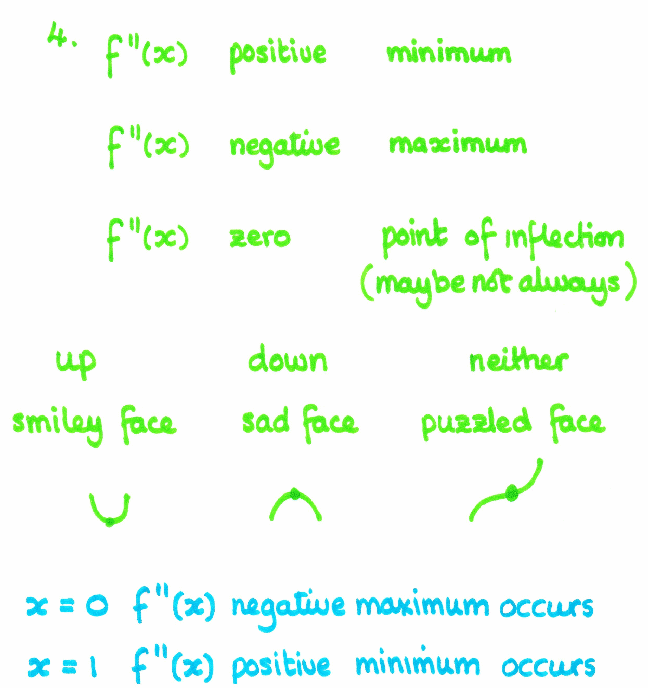
The value f ”(x) will tell us whether the point is a maximum or a minimum or a point of inflection. Once again, there are three situations with f ”(x)
f ”(x) can be negative then the function is at a maximum turning point. f ”(x) can be zero then the function could be a point of inflection but further work is needed to check this. f ”(x) can be positive then the function is at a minimum turning point.
Now we need to put the x- values that we found made f ’ (x) equal to zero into f ”(x) to check the sign and therefore find whether the point is a maximum or minimum. These are not coordinates only the sign is important.
Back to our example, putting the values 0 and 1 into f ”(x):
f ”(x) = 12x - 6 f ”(0) = 12(0) - 6 = - 6 f ”(1) = 12(1)-6 = 6
So when x = 0, f ”(0) = negative Maximum occurs at ( 0,- 6) So when x = 1, f ”(1) = positive Minimum occurs at ( 1, 7)
The value f ”(x) will, also, tell us when the function is concave up and concave down
f ”(x) can be negative then the function is concave downwards f ”(x) can be zero then the function is changing from concaving downwards to upwards (or the other way around). This is not always the case but please don’t worry too much f ”(x) can be positive then the function is concave upwards.
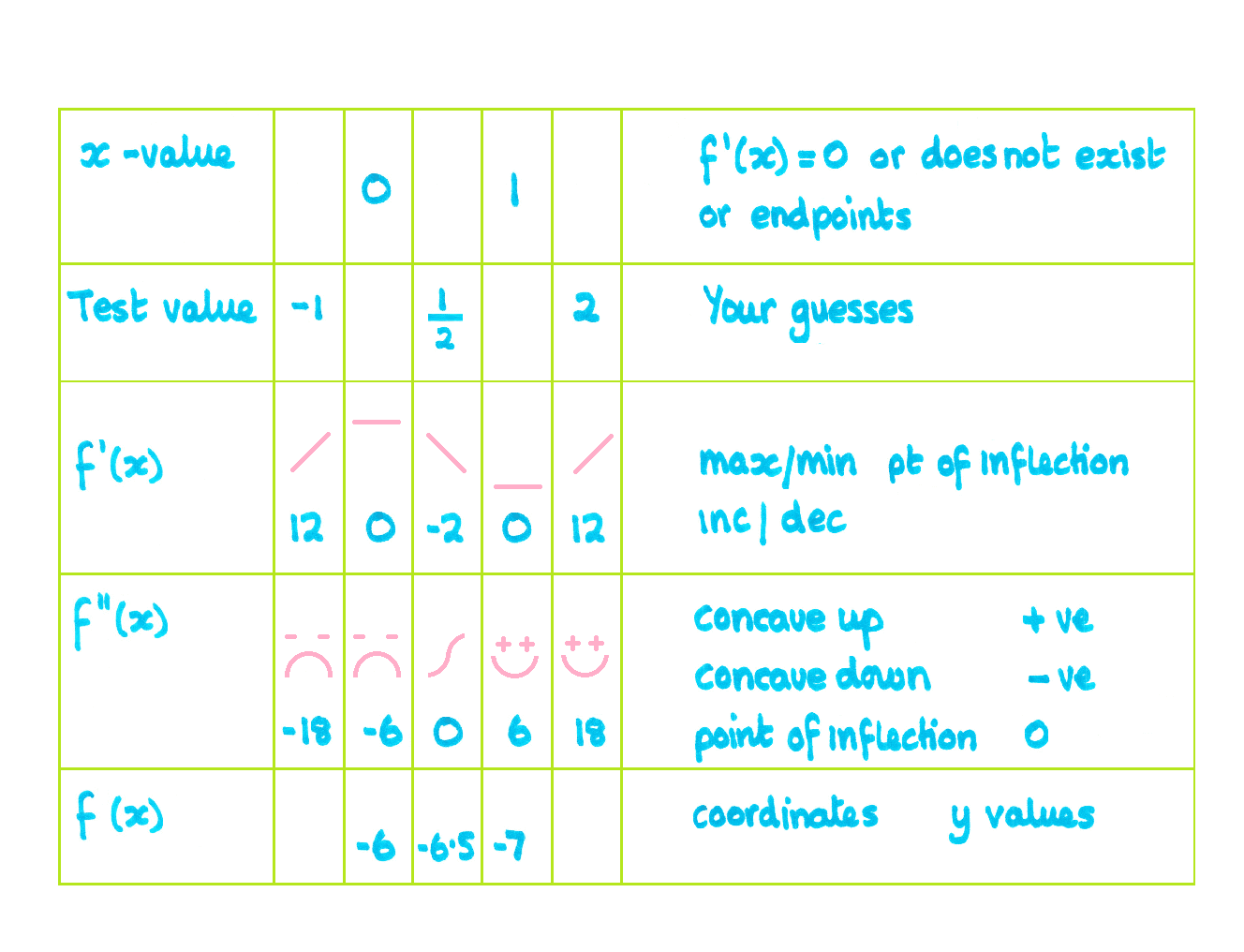
This may be a lot to take in right now but it can all be put in a table that is quite easy to read.
You may be asked to find the intervals where the function is increasing and decreasing, this is not difficult and we will just need a table to help us. This table gives a lot of information and can be used for most of the questions that are asked. The process is as follows:
- Find the turning points.
- Write the values from smallest to largest including the turning points.
- Choose test values between the turning points and endpoints.
- Using test values, find answers to f ’(x). (Turning points, f ’(x) = 0).
- Using test and turning points, find answers to f ”(x).
- Use these values to find increasing, decreasing etc...
f (x) =2x3- 3x2- 6 f ‘(x) = 6x2- 6x = 0 f ”(x) = 12x - 6
|
Values
|
|
|
|
|
|
|
x-value
|
|
0
|
|
1
|
|
|
test
|
-1
|
|
1/2
|
|
2
|
|
f ’(x)
|
12
|
0
|
- 2
|
0
|
12
|
|
f ”(x)
|
-18
|
-6
|
0
|
6
|
18
|
|
f (x)
|
-11
|
-6
|
-6.5
|
-7
|
-2
|
We worked out the turning points by solving f ’ (x) = 0, so I chose the numbers -1, 1/2, and 2. Easy numbers which are on either sides of the turning points. f ’(x) is positive for x < 0 and x > 1 The function is increasing here. f ’(x) is negative for x > 0 and x < 1 The function is decreasing here. f ’(x) is zero when x =0 and x = 1 The function is stationary.
To test for maximum, minimum or point of inflection, look at the values of f ”(x)
When x = 0, f ”(0) is negative, so a maximum occurs: concave down when x < 1/2 since f ”(x) is negative When x = 1, f ”(1) is positive, so a minimum occurs : concave up when x >1/2 since f ”(x) is positive When x =1/2 f ”(1/2) is zero and a point of inflection occurs it changes concavity here.
The last line in the table gives us the co-ordinates of the max, min and point of inflection. If we pretend that -1 and 2 were the endpoints of an interval and we had been asked for the maximum or minimum value in this interval. We would have to calculate the value of f(x) at these two points as well. So the minimum value in the interval is at (-1,- 11) and maximum value in the interval is at (2,- 2).
This is the end and see how easy it is using the table.
Any Questions ask me,
Back to top
|